From Consultant to Founder: How REVI Gear Runs a National Helmet Brand Out of 500 Square Feet at ReadySpaces Denver
She Advised Brands on Logistics. Then She Built One.
Before REVI Gear existed, Lizzie Shilko spent her days inside other people’s supply chains. She worked in management consulting on the consumer packaged goods side, advising food and beverage and sporting goods brands on their third-party logistics relationships.
The work gave her an unusual education. She saw how brands and their 3PLs actually interacted, and she kept finding the same pain point buried in the invoices: accessorial and miscellaneous fees, hidden labor rates, charges that never appeared in the original quote. The lever she pulled for clients was almost always the same one, renegotiating and consolidating their 3PL partners to claw back margin.
So when she left consulting to build a ski helmet brand of her own, she already knew exactly what she did not want.
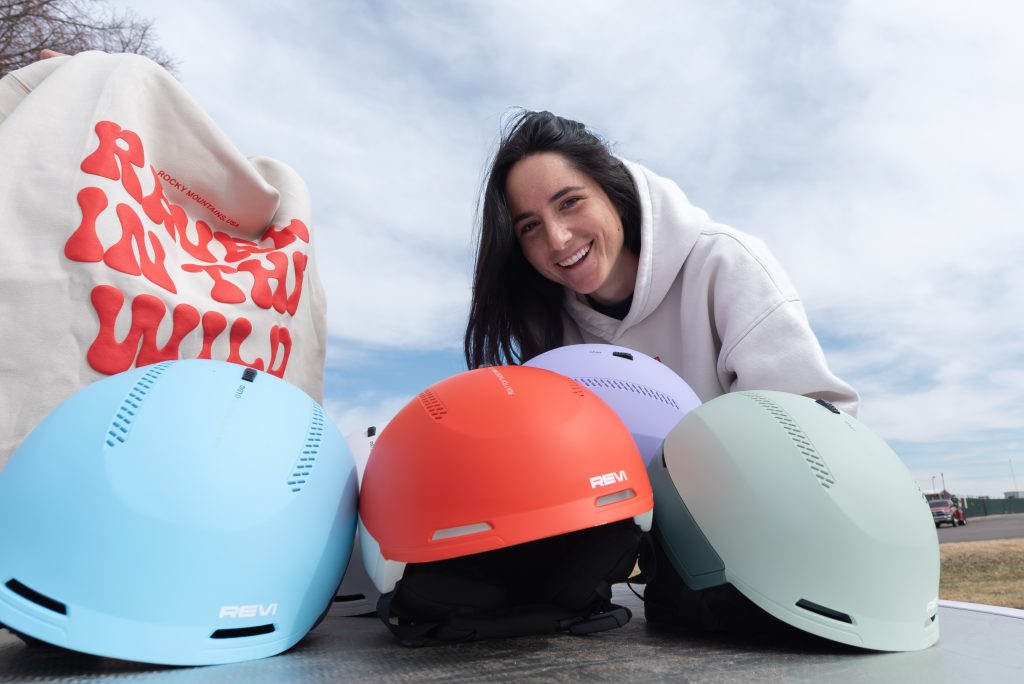
The Problem With Both Options
A new hard goods brand usually gets two choices. Hand fulfillment to a 3PL and accept the fee structure. Or sign a warehouse lease that assumes a business much larger than the one you have.
Neither worked. Shilko had seen the 3PL math from the inside. But she was also wary about moving into a warehouse of her own, and for good reason. Helmets are not a forgiving product to store badly, and a first-year brand signing a multi-year industrial lease is making a bet it cannot afford to lose.
What she actually needed was narrower than either option: enough warehouse space to hold a season of inventory, access to a real loading dock, and the ability to make sure every order went out correctly and on time.
“Every order was pick, packed and shipped timely.” — Lizzie Shilko, Founder & CEO, REVI Gear
A Loading Dock Is Not a Nice-to-Have
She found the happy medium at ReadySpaces Denver Park-Hill, and moved into a 500 square foot unit in September 2025.
For a brand that receives freight by the container and ships nationally, dock access is not a perk. It is the whole operation. REVI needs docks, pallet jacks, and the everyday ease of carriers pulling in and out without it becoming a project.
Both direct-to-consumer and wholesale orders now ship out of the unit. That would not be realistic from a garage, a storage locker, or a spare room, and it is the specific thing a co-warehousing facility solves that self-storage cannot.
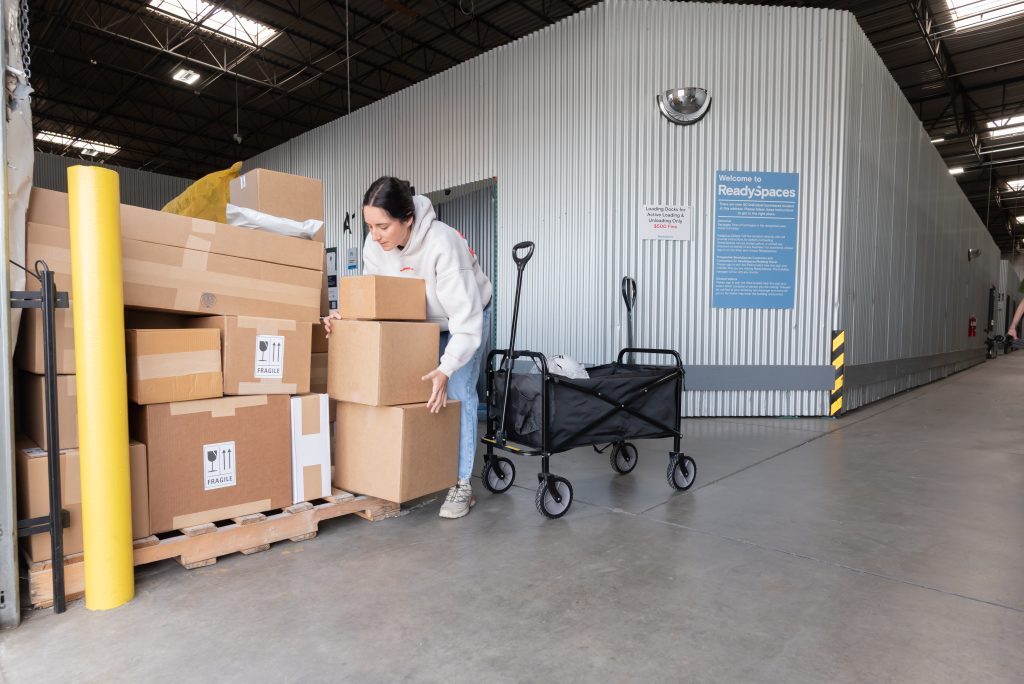
The rest of the facility did something Shilko did not entirely expect. A business address, a reliable printer, a conference room she can actually bring people into. She describes it as professionalizing the business, which is a thing founders rarely budget for and immediately feel the absence of.
The billing structure mattered too, and given her consulting background it is not a small point. One payment. No hidden fees. Straightforward. After years spent digging accessorial charges out of client invoices, she chose the arrangement where there was nothing to dig for.
700 Helmets and Six Days
The clearest picture of what the space does came from a single order.
REVI received an order for 700 helmets. That is a lot of volume to receive, sort, palletize and stage, and it landed on a company that does not have a warehouse team. What Shilko had instead was equipment access and neighbors. Other members at the facility came over and helped palletize.
It took six days of grueling work. It also got done, inside 500 square feet, without a 3PL and without a warehouse lease.
That balance is the thing she keeps coming back to. Resources when she needs them, and no one standing between her and her own inventory when she does not. The dock gets respected. The community gets used. When something goes sideways, there are other operators in the building who have already had that exact problem and will debrief it with her.
A Business That Ships for Four Months and Waits for Six
Ski gear is severely seasonal, and the calendar is unforgiving. Inbound freight arrives in October. Outbound shipping runs hard for four to five months. Then, in Shilko’s words, crickets for six months.
That shape is brutal under a conventional industrial lease. You pay for peak-season square footage twelve months a year and use it for five. It is the single biggest reason seasonal brands end up handing margin to a 3PL instead.
Flexible terms change the math. REVI can hold a full season of helmets and goggles through the months that matter without committing to a footprint sized for October in the middle of June.
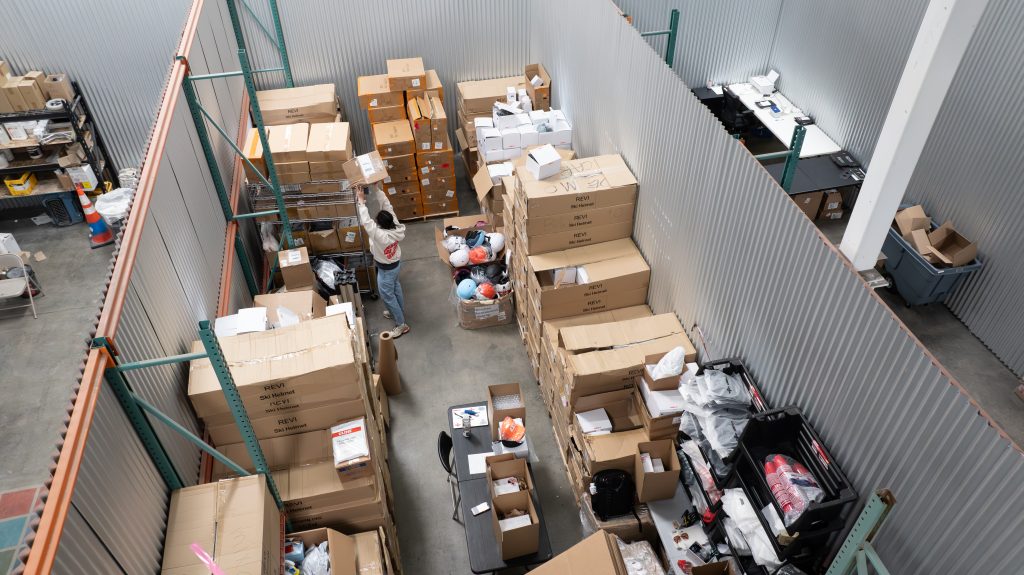
A year in, REVI is still in the same unit. What changed is how it is used. Shilko added racking. She built a mini mezzanine. She reorganizes constantly, treating the 500 square feet as an optimization problem rather than a fixed constraint, which is roughly what you would expect from someone who used to do this for a living.
What She’d Tell Another Product Founder
Shilko’s advice is the kind that only comes from having personally moved the pallets. It is worth repeating in full for anyone about to receive their first container.
- Have your manufacturer organize by SKU before shipping. This is the big one.
- One color per pallet. Every pallet.
- Pre-organize your order before it ever leaves the factory.
- Measure carefully before ordering boxes. Otherwise you are paying to ship air.
- Smallest box, lightest packing material.
- Keep spare materials aside to stop crushing.
- Buy a label maker.
She also recommends going to the manufacturing facility in person. She spent a week on the floor in July 2025. It built a relationship with the team, and it made everything downstream faster, including safety testing.
“I will be skiing in this, and so will my friends, family and loved ones. I want to make sure it’s safe.” — Lizzie Shilko, Founder & CEO, REVI Gear
Built for Everyone on the Mountain
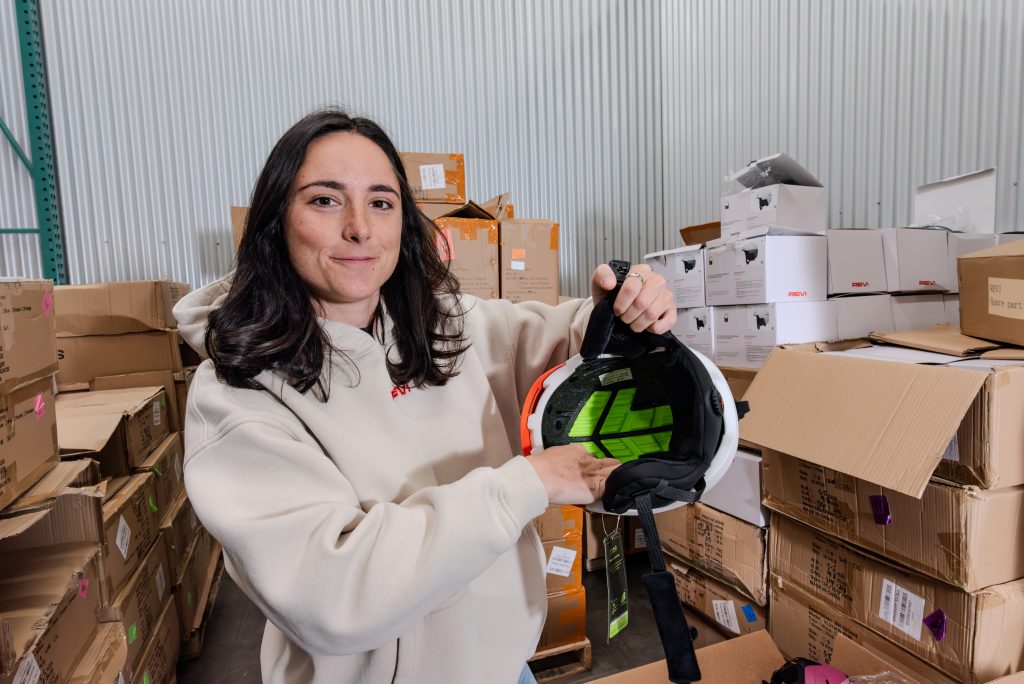
REVI’s products are unisex, with no compromise on the technical side. Shell, foam, impact system, MIPS. The differentiation lives in the thoughtfulness around fit and feel, and in colorways meant to match whoever is wearing them rather than a default.
That attention has found people the industry usually overlooks. Riders with cochlear implants and hearing aids have reached out specifically to say they appreciated the fit. Skiing and snowboarding are personal, and the details are where that shows up.
You can see the full REVI Gear line at revigear.com, or follow along at @revigear on Instagram.