From Daily Post Office Runs to a Real Warehouse: How TSL Brands Scaled at ReadySpaces South Gate
The Business Behind the Bottles
Matt Herman built The Streamline Lab to solve a problem that kills good spirits brands: a great liquid with no route to market. A distillery can produce something excellent and still stall out in the US, because getting bottles onto shelves and behind bars takes a commercial engine most young brands do not have.
That engine is now two companies. The Streamline Lab came first. TSL Brands followed, built to give spirits brands an affordable path to scale in the US, with a team working alongside distributors and retailers to open accounts and keep them reordering. The portfolio runs across mezcal, gin, rye, vodka and rum.
Every one of those brands has a physical component. Bottles move. Samples ship to buyers. Which means a spirits acceleration company, however much of its work happens in spreadsheets and sales calls, needs a warehouse.
For a while, it did not have one.
A Storage Unit and a Car
The first version of the operation ran out of a traditional storage unit. Not a warehouse. A storage unit, the kind with a roll-up door, a padlock, and hours posted on a sign out front.
There was no loading dock, so there was no carrier pickup. Every order that went out went out in Herman’s car. He drove to the post office. Every day.
Anyone who has run a physical business knows exactly what that costs, and it is not gas money. It is the founder’s afternoon, every afternoon, spent in a line at USPS instead of on the phone with a buyer. It is a hard ceiling on how many orders you can physically process. And it is a business that cannot grow past the size of a trunk.
The fix came from the brands he was already working with.
“We came up with this idea, what if I started an ecommerce fulfillment warehouse that was vertically integrated, they [brands he was working with] gave me some startup inventory, and basically that’s what funded my first unit here, and from there we were actually able to make profit, control everything, breakage was down, and then just kind of grew from there.” — Matt Herman, Founder & CEO, TSL Brands
350 Square Feet and a Loading Dock
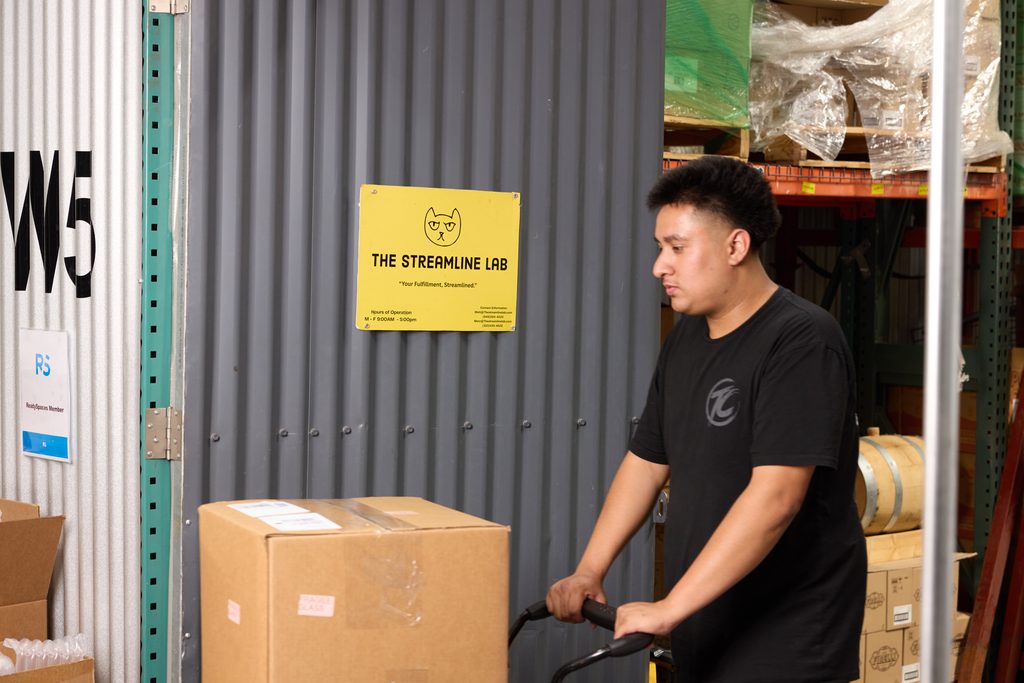
In June 2024, Herman moved into a 350 square foot unit at ReadySpaces South Gate. Same square footage ballpark as the storage unit, but a fundamentally different piece of infrastructure underneath it: shared loading docks, forklifts and pallet jacks, 24/7 access, and carriers that pull up to the building instead of the founder driving to them.
The daily post office run ended.
Shipping liquids is not like shipping anything else. Glass breaks, weight adds up fast, and a leaked bottle can ruin an entire pallet and a relationship with a buyer. The team runs specialized packing equipment built for liquids, which is the difference between product that arrives and product that arrives intact. That equipment needs a real workspace to live in.
Doubling Without Moving
Then the portfolio grew, and 350 square feet stopped being enough.
This is the moment that usually costs a growing company a quarter. Find a new building, negotiate a lease, budget the move, absorb the downtime, hope you sized it right this time. Instead, TSL doubled into a 700 square foot unit in the same facility and added a 210 square foot office alongside it for admin and back-office work.
Same address. Same building. Same loading docks. More room.
“What’s great about the ReadySpaces model is that you can expand and contract as you grow, and that’s really helpful in that regard.” — Matt Herman, Founder & CEO, TSL Brands
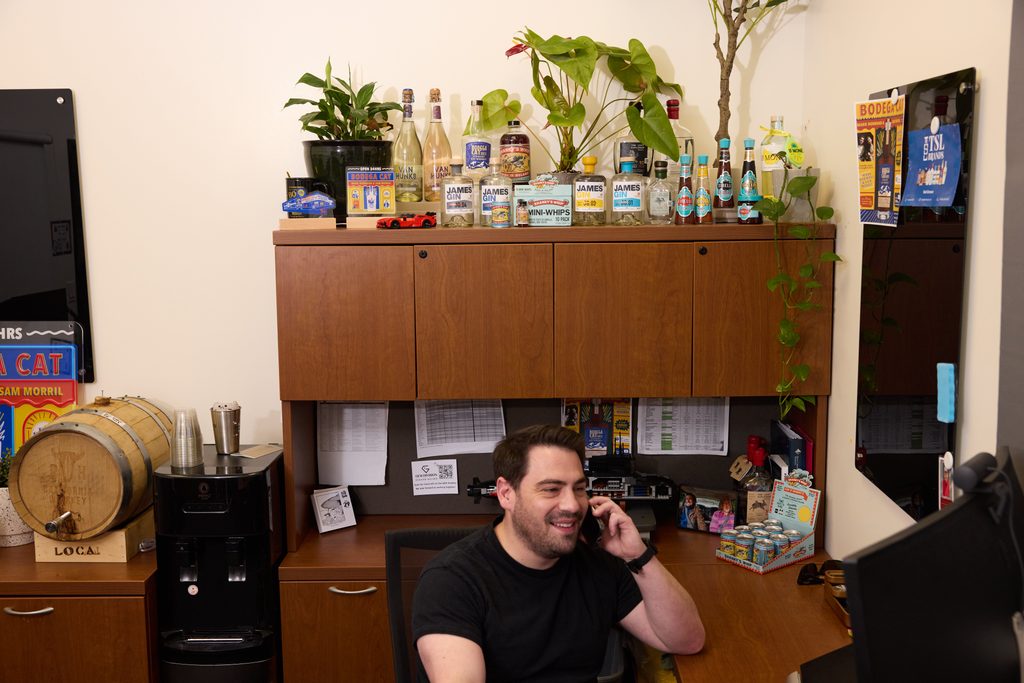
The office matters more than the square footage suggests. A spirits business that only needs a warehouse can get by anywhere with a roof. A business that also runs commercial planning, forecasting and account management needs somewhere to do that work. Having both under one roof means the people selling the brands and the people shipping them are in the same place.
The Hire That Tells the Story
The clearest measure of how far this has come is not square footage. It is headcount.
TSL now has a dedicated warehouse manager. Two years ago the warehouse manager was the founder, and the fulfillment department was his car. That is a hire a company only makes when the volume justifies it and the space supports it.
Built for Beverage and Distribution Businesses
Brand builders in beverage run into the same wall repeatedly. Inventory is lumpy, arriving by the pallet and moving in bursts. Growth is hard to forecast, so committing to square footage years ahead is guesswork. And self-storage, the usual first stop, gives you a locked room without any of the infrastructure that makes shipping possible.
ReadySpaces is built for the in-between: shared loading docks with forklifts and pallet jacks included so freight moves without a car and a hand truck, room to scale in place from 350 to 700 square feet without leaving the building or renegotiating a lease, warehouse and office together so fulfillment and admin are not split across town, gated and secure facilities with 24/7 access that matter when the inventory is high-value spirits, and all-inclusive pricing after the initial term.
South Gate sits about a mile from the I-710 with direct connections to the I-105, roughly 20 miles from the Port of Los Angeles. For a business bringing in imported spirits and shipping across California, that proximity is not a detail.
Still Shipping, No Longer Driving
Two years ago, TSL Brands was a founder, a storage unit, and a car that doubled as a fulfillment department. Today it is a 700 square foot warehouse, a 210 square foot office, a warehouse manager, and a portfolio of spirits brands moving through docks the company does not have to own.
You can see the full TSL Brands portfolio at tslbrands.com.