The Small Business Scaling Challenge
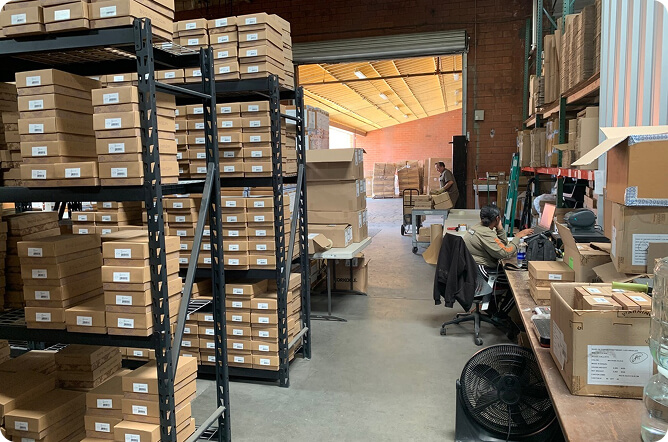
Every founder trying to scale a small business hits the same moment of truth. The garage that once seemed spacious now overflows with inventory. Orders that used to feel exciting now feel overwhelming. The systems that worked at 50 orders per month collapse at 500. Growth, the thing every entrepreneur pursues, has become a threat to the very business it was supposed to grow.
This is the scaling challenge. And nearly every growing business faces it.
The difference between businesses that scale successfully and those that plateau or fail at these inflection points isn't luck or timing. It's pattern recognition. Successful founders learn to recognize the signals, prepare for the transitions, and execute the moves that convert growth pressure into sustainable expansion.
Why We Analyzed 50+ Success Stories
Over the past several years, we've worked with thousands of small businesses across our 38 locations in the U.S. and Canada. We've seen businesses navigate the garage-to-warehouse move, the first-hire decision, the multi-location expansion. Some succeeded brilliantly. Others struggled, sometimes failing despite apparent success.
To understand what separates these outcomes, we analyzed more than 50 small business success stories. We examined their growth trajectories, their decision-making at key inflection points, the challenges they faced, and how they overcame them.
What emerged wasn't a single formula. Businesses are too diverse for that. Instead, we found patterns. Recognizable trajectories. Predictable challenges. And scaling strategies that consistently work across different industries, geographies, and business models.
The Five Growth Patterns
- The Steady Climber: Consistent 20-30% annual growth through methodical expansion
- The Hockey Stick: Extended building phase followed by explosive growth
- The Seasonal Scaler: Revenue concentrated in specific periods requiring flexible capacity
- The Pivoter: Business model evolution driving growth through adaptation
- The Multi-Location Expander: Geographic replication of proven models
The Growth Timeline: When to Make Your Move
The most common question we hear from growing businesses: "How do I know when it's time?"
Time to get warehouse space. Time to hire. Time to expand. Time to commit resources to growth rather than continuing to scrape by with improvised solutions.
The answer isn't a specific revenue number or order count. Those thresholds vary too much by business type. Instead, successful businesses learn to recognize signals that indicate readiness.
Key Growth Indicators From Successful Businesses
Most successful businesses move during Stage 2 or early Stage 3, when constraints are clear but before crisis creates chaos.
Common Timing Mistakes to Avoid
Moving too early:
- Committing to space before validating product-market fit
- Sizing for projected rather than proven demand
- Taking long-term leases when growth trajectory remains uncertain
Moving too late:
- Waiting until operations are in crisis before acting
- Missing growth opportunities due to capacity constraints
- Allowing customer experience to degrade before responding
The goal is the "Goldilocks zone": moving when operational constraints clearly limit growth, but before crisis makes the transition chaotic.
The Startup Warehouse Timeline
Complete decision framework with industry-specific thresholds for timing your move
Small Business Growth Strategies: 5 Proven Scaling Patterns
Understanding growth patterns helps you anticipate challenges and adopt strategies proven by businesses with similar trajectories. Our analysis of 50+ successful small businesses revealed five distinct scaling patterns, and the strategies that made each one work.
Most Common Growth Trajectories
Pattern 1: The Steady Climber
Consistent 20-30% year-over-year growth through methodical expansion. These businesses focus on customer retention, profit reinvestment, and process standardization. Example: M&J Screen Printing built their business through consistent quality and customer relationships.
Pattern 2: The Hockey Stick
Extended building phase followed by sudden inflection and 50-100%+ annual growth. Success requires building operational foundations before the growth spike hits. Examples: Salacious Drinks and MiniKatana both succeeded because their systems were ready when growth exploded.
Pattern 3: The Seasonal Scaler
Revenue concentrated in specific periods with dramatic peak/trough swings. Requires variable cost structures and flexible space arrangements. Example: Ginger's Breadboys manages Q4-concentrated demand without year-round costs sized for December volume.
Pattern 4: The Pivoter
Business model evolution driving growth through market adaptation. Operational flexibility enables pivots without massive disruption. Examples: RideFrsh evolved from DTC to wholesale; Modtub adapted as the wellness market developed.
Pattern 5: The Multi-Location Expander
Geographic replication of proven operational models. Process documentation and technology standardization enable quality across locations. Examples: Ferguson Moving & Storage and Crux Logistics expanded by replicating what works.
Critical Success Factors Identified
- Financial discipline: Cash flow management separates survivors from failures
- Operational readiness: Systems must exist before scaling stress-tests them
- Flexibility maintenance: Avoid locking into infrastructure that may not fit evolving needs
- Customer focus: Maintain quality through growth to sustain long-term success
Across the 50+ businesses we analyzed, the single most common factor in successful scaling was timing: not moving too early before systems were ready, and not waiting until crisis forced reactive decisions. The businesses that scaled smoothly were the ones that recognized the signals and acted proactively.
Warning Signs and How to Address Them
Operational warning signs: Error rates increasing, fulfillment times lengthening, customer complaints rising, team morale declining. Address by slowing growth to rebuild quality and investing in systems.
Financial warning signs: Cash flow turning negative, fixed costs exceeding comfortable percentages, growth not matching projections. Address by renegotiating terms, focusing on profitable segments, and pausing expansion plans.
Strategic warning signs: Customer feedback increasingly negative, competitors gaining ground. Address by researching customer needs and adjusting positioning.
Scaling Strategies: Full Analysis
Data-driven analysis with complete pattern identification from over 50 success stories
Industry-Specific Growth Insights
Different industries face different scaling dynamics. Understanding your industry's patterns helps calibrate expectations and focus preparation on what matters most for your business type.
eCommerce Scaling Patterns
Growth triggers: Order volume thresholds (typically 500-1,000 monthly orders), SKU proliferation creating inventory complexity, multi-channel expansion multiplying operational requirements.
Space evolution: Stage 1 (storage plus packing station) → Stage 2 (optimized fulfillment layout) → Stage 3 (sophisticated infrastructure with receiving, QC, returns processing).
Benchmarks from the businesses we analyzed: 2,000-4,000 SF per $1M revenue; typical first warehouse 1,000-2,500 SF; revenue at transition $500K-$1M.
Examples: Salacious Drinks (hockey stick growth), MiniKatana (high SKU complexity), Ginger's Breadboys (seasonal eCommerce).
Service Business Growth
Growth triggers: Equipment capacity limits, quality control requirements, safety and compliance needs, professional image requirements.
Space evolution: Stage 1 (production plus basic storage) → Stage 2 (separated functions) → Stage 3 (optimized workflow with specialized areas).
Examples: M&J Screen Printing (equipment-driven expansion), Ferguson Moving & Storage (multi-location service replication).
Creative & Manufacturing Scaling
Growth triggers: Production capacity limits, quality control needs at volume, inventory management for product variations, hybrid manufacturing plus fulfillment needs.
Examples: Slime Fantasies (creative manufacturing with social media growth), Project Footwear (production scaling with wholesale development).
Distribution Business Growth
Growth triggers: Supplier/customer count growth, geographic reach expansion, logistics complexity, service level requirements.
Benchmarks from the businesses we analyzed: 5,000-10,000 SF per $1M revenue; typical first warehouse 3,000-7,000 SF; revenue at transition $400K-$800K.
Examples: Abstinence Spirits (distribution expansion), ShipDif (3PL operations scaling through client growth).
Industry-Specific Growth Patterns
Detailed comparative analysis and industry benchmarks for eCommerce, manufacturing, and distribution
Financial Planning for Growth
Running out of cash mid-expansion kills more scaling businesses than running out of space ever will. Smart financial planning enables growth; poor planning constrains it. Understanding costs, metrics, and ROI expectations helps you make confident decisions about when and how to expand your operations.
Budget Allocation Insights From Successful Businesses
Space cost as percentage of revenue varies by scale:
- Under $500K revenue: 5-8% of revenue
- $500K-$1M revenue: 4-6% of revenue
- $1M-$3M revenue: 3-5% of revenue
- $3M+ revenue: 2-4% of revenue
Higher percentages at lower revenue reflect minimum viable space requirements. Successful businesses budget for total occupancy cost, not just rent, including utilities, insurance, setup, and operational costs.
Funding Strategies That Worked
Bootstrapping: Most successful businesses fund expansion through operational cash flow. Flexible terms enable this by avoiding massive upfront commitments.
SBA loans: For larger investments, SBA 504 or 7(a) loans provide favorable terms for qualified businesses.
Revenue-based financing: Alternative funding matching payments to revenue, useful when traditional financing isn't accessible.
Key insight: Choose flexible arrangements that allow adjustment if projections miss. Month-to-month terms let you scale up or down as needed.
ROI Timelines and Expectations
Capacity-constrained business: 3-6 month payback (you're already losing revenue)
Efficiency-focused move: 6-12 month payback (time savings compound quickly)
Anticipatory expansion: 12-18 month payback (investing ahead of demand)
ROI sources: Efficiency gains (30-50% time reduction was typical across the businesses we analyzed), capacity gains (ability to fulfill more orders), and growth enablement (revenue that would be impossible otherwise).
Cash flow tip: Budget for 1-2 months of dual location costs during transition, and maintain 3-6 months operating expenses in reserve.
Financial Planning Guide
Get our complete guide with budget frameworks and planning templates
Real Success Stories Deep Dive
Patterns come to life through specific examples. These businesses faced the same challenges you're navigating, and found solutions that worked. Here's what we learned from their journeys.
Premium mixers that rode the hockey stick to success
M&J Screen PrintingSteady growth through quality and customer relationships
MiniKatanaFrom 600 to 3,000+ monthly orders with operational excellence
Ferguson Moving & StorageMulti-location expansion done right
Ginger's BreadboysMastering seasonal demand without year-round overhead

Lessons Learned and Actionable Insights
Key lessons from all 50+ success stories:
- Build your operational foundation before growth hits. Systems are easier to create in calm than in crisis
- Choose flexible infrastructure when your growth trajectory is uncertain
- Maintain quality standards even under volume pressure. Your reputation compounds
- Document processes before expanding to multiple locations
- Cash flow management separates businesses that survive scaling from those that don't
- The right time to move is when constraints are clear but before they become critical
View All Success Stories
Explore our complete library of small business success stories across all industries

Ready to Write Your Own Success Story?
Join the thousands of businesses growing with ReadySpaces, including the 50+ profiled in this guide. Get flexible warehouse space that grows with you. Month-to-month terms. No personal guarantees. Move in within days.
Building Your Growth Roadmap
Understanding patterns and examples helps, but your business needs its own roadmap. Use this framework to create a scaling plan tailored to your specific situation and goals.
Step-by-Step Planning Process
- Phase 1 (Foundation, $0-$250K): Focus on validation. Prove the model works
- Phase 2 (Traction, $250K-$1M): Focus on systems and first major scaling decisions
- Phase 3 (Growth, $1M-$5M): Focus on operational excellence and team building
- Phase 4 (Scale, $5M+): Focus on strategic positioning and leadership development
Which of the five growth patterns best describes your trajectory? Steady Climber, Hockey Stick, Seasonal Scaler, Pivoter, or Multi-Location Expander?
What major decisions are approaching in the next 6-12 months? Space transition, team additions, system upgrades, market expansion?
Based on current trajectory, when will each transition need to happen? Build in preparation time before each major move.
Milestone Checkpoints
Phase 1 → Phase 2 Transition Checklist:
- 100+ customer transactions completed
- Positive customer feedback and repeat purchases
- Monthly revenue consistently $15-20K+
- Basic processes documented
- Unit economics validated
Phase 2 → Phase 3 Transition Checklist:
- $500K+ annual revenue run rate
- 20%+ year-over-year growth
- Professional warehouse space operational
- Core systems implemented
- 1-3 team members beyond founders
Phase 3 → Phase 4 Transition Checklist:
- $3M+ annual revenue run rate
- 10+ team members
- Management layer functioning
- Standardized processes across operations
- Sustainable profitability achieved
Complete Growth Roadmap
Get our full roadmap with downloadable templates and planning checklists
Frequently Asked Questions
Scaling a business comes with predictable challenges. Here are the questions growing businesses ask most, and the mistakes behind them.
Every successful business in this guide started exactly where you are now. Use these lessons, avoid these pitfalls, and build a scaling strategy that works for your unique situation. Your success story is waiting to be written.